
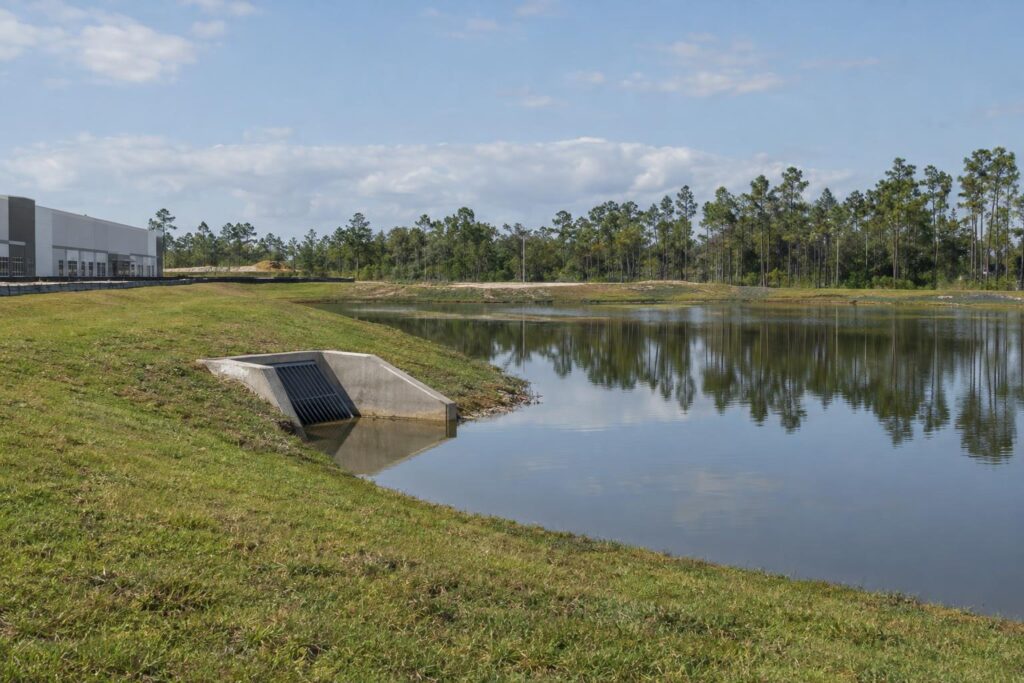
On a drainage sheet, a retention pond keeps the stormwater it captures on site, while a detention pond holds the water temporarily and then releases it through an outlet structure. That one distinction decides how a pond is graded, what soil it needs, how it gets permitted and what the crew builds. If you’re comparing a retention pond vs detention pond for a commercial site or subdivision, the plans and the permit tell you which one you have.
In Florida the difference carries extra weight, because the water management districts review stormwater systems as part of Environmental Resource Permitting. Here’s how the two ponds work, how the South Florida Water Management District and the Southwest Florida Water Management District treat them, and what to check before you price the earthwork.
Retention Pond vs Detention Pond at a Glance
Both ponds store runoff from roofs, parking lots and roads so it doesn’t flood the neighbors or overload the downstream system. What happens to the water afterward is the split.
- Retention
- The captured volume soaks into the ground or evaporates. It isn’t discharged to a surface water body.
- Detention
- The captured volume is released slowly, through a control device in an outlet structure, at a rate the permit allows.
- Soil dependence
- Retention only works where the soil drains and the water table sits low enough. Detention doesn’t rely on infiltration, so it fits tighter soils and higher water tables.
- Standing water
- A retention basin is normally dry between storms. A detention pond can be dry, or it can hold a permanent pool of water.
The South Florida Water Management District states the retention point plainly in its Environmental Resource Permit handbook: unlike detention basins, the treatment volume for retention systems is not discharged to surface waters. That’s the sentence to keep in mind when someone calls every stormwater pond a retention pond.
How a Retention Pond Works
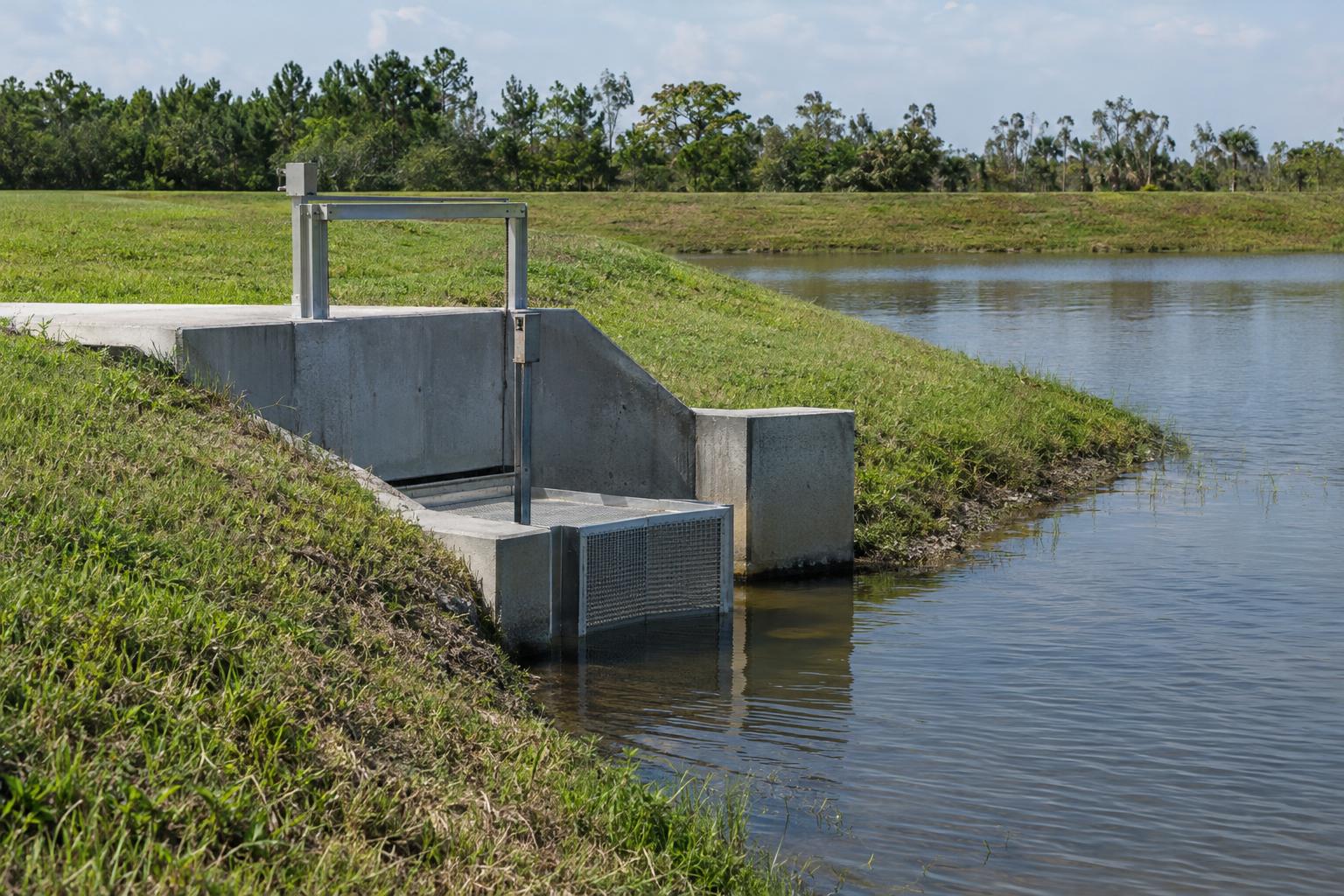
A retention basin is a low area that takes in runoff and lets it percolate into the soil. The district handbook lists examples: man-made or natural depressions with a flat, vegetated bottom, shallow landscaped areas that store stormwater, and vegetated swales with swale blocks or raised inlets. After drawdown the basin shouldn’t hold any water, so it’s normally dry.
The handbook sets a recovery time for dry retention and detention areas: they must recover the stored volume within 72 hours. It also asks for mosquito control ditches or similar features and for a design that allows regular maintenance and vegetation harvesting. The bottom of a dry area sits at least 1.0 foot above the control elevation, with small exceptions such as sumps.
For the contractor, the sensitive part is the basin floor. Fine clay, silt and organics wash in from an active site and seal the bottom, and the handbook warns that construction methods and the sequence of site work have to keep the basin effective and not render it inoperable before development is finished. In practice that means protecting the footprint during mass grading, keeping silt-laden runoff out and finishing the basin bottom late in the sequence.
Retention can be underground, too
The same handbook defines an exfiltration trench as a subsurface retention system, a perforated conduit surrounded by aggregate that temporarily stores and infiltrates runoff. They’re an option when a lot has no room for an open basin.
How a Detention Pond Works
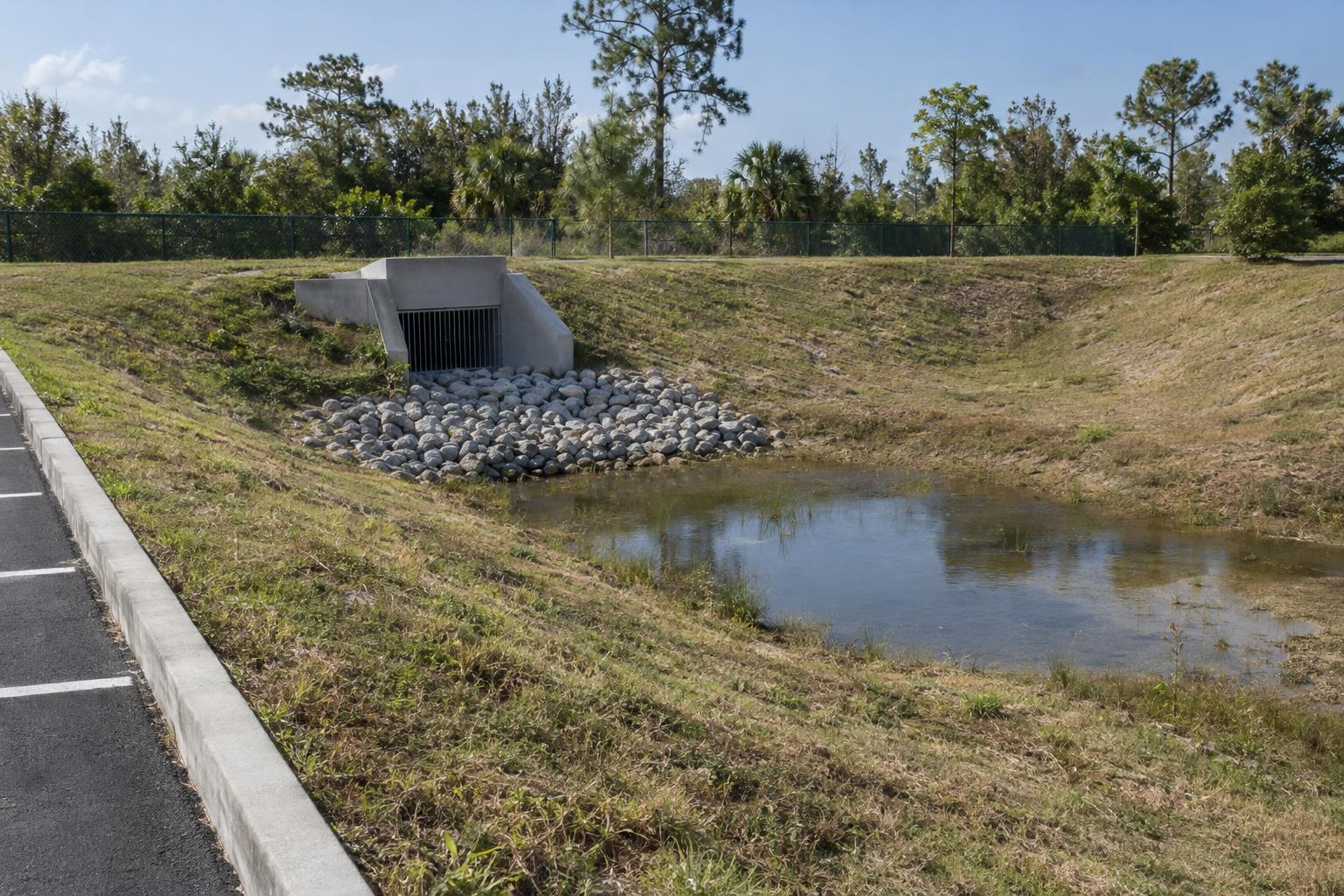
A detention pond catches a storm’s runoff and releases it through an outlet structure after the peak has passed. The handbook defines detention volume as the open surface storage behind the discharge structure, between the overflow elevation and the control elevation. Water bleeds out through a control device, such as an orifice, down to the control elevation.
Detention comes in two common forms:
- Dry detention
- The pond drains down between storms and is mowed like a lawn. You’ll see these behind commercial buildings, with a concrete outlet structure and riprap at the discharge.
- Wet detention
- The handbook describes these as permanently wet ponds designed to slowly release collected stormwater through an outlet structure. They’re what most people picture as a Florida stormwater lake.
Wet ponds carry more design detail. For wet retention/detention areas, the handbook sets a 0.50-acre minimum area and calls for side slopes no steeper than 4:1 (horizontal:vertical) from the top of bank out to a minimum depth of 2.0 feet below the control elevation, or an equivalent substitute. It also asks for a littoral zone, the planted shelf at the water’s edge, and for a flow path that avoids dead spots. Those details show up as grading tolerances and planting scope in your bid.
That’s also why the common name is misleading. Many Florida ponds that hold water year-round get called retention ponds in conversation, but the permit usually treats them as wet detention.
What Florida Permitting Means for Pond Design
Stormwater ponds for new development in Florida are usually reviewed under Environmental Resource Permitting. Which district reviews your project depends on where it sits. The South Florida Water Management District covers most of the Southwest Florida counties we work in, and the Southwest Florida Water Management District covers DeSoto and Sarasota counties and much of Charlotte County. Each district publishes its own Applicant’s Handbook Volume II with district-specific criteria for stormwater quantity, flood control and water quality, so the numbers aren’t interchangeable.
Here are the South Florida requirements most likely to change what you build:
- Retention share for commercial work
- The handbook requires commercial or industrial zoned projects to provide a minimum of 20% of the load reduction required by Applicant’s Handbook Volume I in a retention BMP or a separate containment system designed to prevent discharge.
- Control devices
- The handbook sets minimum dimensions for gravity control devices, including a 3.0-inch diameter for a circular opening, which sets the smallest bleed-down opening the handbook treats as standard. The handbook also notes that local drainage districts or governments may have more stringent criteria.
You can read the full criteria in the South Florida Water Management District’s ERP Applicant’s Handbook Volume II, effective June 28, 2024. We build to the stamped plans and the permit conditions; the engineer of record chooses the pond type, and the permit controls any change.
What to Check in the Plans Before You Bid
In any retention pond vs detention pond decision, these items drive the earthwork price and the schedule. A few minutes with the drainage sheets and the permit sorts most of them out.
- Pond type and label
- Is it labeled dry retention, dry detention or wet detention? The label tells you whether the bottom has to infiltrate and whether a permanent pool is expected.
- Control and overflow elevations
- These set the bottom grade, the outlet structure and the storage volume. Small survey errors change the volume.
- Soil and groundwater data
- A retention basin only works if the geotechnical data supports infiltration. If conditions on site differ from the report, tell the engineer early.
- Outlet structure and discharge protection
- Look for the control device, the skimmer, the pipe connections and the riprap apron or headwall.
- Slopes, littoral zone and stabilization
- Wet ponds add shelf grading, planting and sodding.
- Sequence and protection
- Check when the basin can be finished and how its floor is protected while the rest of the site is built.
The pond usually sits beside pads, parking and underground piping, so we price it with the surrounding work. Our site development scope covers clearing, earthwork, erosion control and site utilities, and our drainage work covers the structures, culverts and swales that feed and drain the pond.
Frequently asked questions about retention and detention ponds
Can a retention pond hold water all the time?
A true retention basin is designed to drain down by infiltration, and the district handbook describes it as normally dry. A pond that keeps a permanent pool and releases through an outlet is usually permitted as wet detention, even if people call it a retention pond.
How fast does a dry pond have to drain?
Under the South Florida handbook, dry retention and detention areas must recover the stored volume within 72 hours. Your permit and local rules may add requirements, so read the conditions that apply to your project.
Which agency decides the pond type?
The engineer of record designs the system and the water management district reviews it under the Environmental Resource Permit. Counties and cities may add their own rules. The contractor builds to the approved plans and doesn’t change the pond type without the engineer’s approval.
Does the pond type change the construction schedule?
Usually. Retention basins call for careful sequencing so the floor stays clean and able to infiltrate, and wet detention ponds add littoral shelves, slopes and planting. Put those items in the bid schedule.
Call (239) 841-6400 or invite V&H to bid and send the drainage sheets and permit conditions, so we can price the pond, outlet structure and grading against what’s actually drawn.